People who want beautiful skin often turn to expensive creams, complicated skincare routines, or trendy facial treatments. But the truth is that the best way to get naturally glowing skin starts with your daily habits, like what you eat, how much water you drink, how much sleep you get, and how you deal with stress. Your overall health is reflected in your glowing skin, and what you do every day can have more of an impact than any product in your bathroom.
Everything you do and say is directly reflected in your skin, the largest organ in your body. When you feed your skin the right nutrients, protect it from the elements, and regularly care for it, it can give you a radiant, healthy glow. While genetics play a role, there are many factors you can change that affect your skin tone, texture, and clarity.
The best news? Most of the habits that keep your face clear and healthy are simple, natural, and affordable. Change everything in your life, but make smart, small changes that will pay off over time.
The Importance of Nutrition
What you eat changes the way your face looks and feels. Antioxidants, healthy fats, vitamins, and minerals are all found in foods that help repair skin cells, reduce inflammation, and build collagen. Fruits, nuts, olives, berries, fresh leafy greens, fatty fish, and colorful vegetables are all good choices. These foods keep your skin hydrated from the inside out and prevent your skin from aging too quickly.
Staying hydrated is also very important. The cells that make up your skin need water to function properly. If you don’t drink enough water, your skin can look dull, flaky, or sensitive. In addition to eating water-rich foods like cucumbers and fruit, drinking water throughout the day can also help keep your skin smooth.
On the other hand, sugar and highly processed foods can cause redness and acne. Cutting back on refined carbohydrates and added sugars can improve your facial skin, improve your stomach, and give you more energy.
Managing Stress, Sleep, and Exercise
Good sleep is essential for facial care, but it’s often overlooked. Your body repairs and produces new cells during sleep, including skin cells. Getting 7-9 hours of regular sleep each night gives your face time to repair and renew, making you look younger and more beautiful. If you’re consistently sleep-deprived, you may experience dark circles, puffiness, or fatigue around your eyes.
The glow of your skin can also be affected by how much you exercise. Exercise increases blood flow, which brings oxygen and nutrients to your skin cells. It also helps the body flush out toxins through sweat, which cleans pores and removes dirt.
Stress can also change your complexion. Hormonal changes caused by chronic anxiety can lead to inflammation, acne, and even skin conditions like eczema and psoriasis. Doing daily activities like deep breathing, meditating, or taking a short walk outdoors can help your body and mind feel calmer.
A Really Effective Skincare Routine You Can Do Every Day
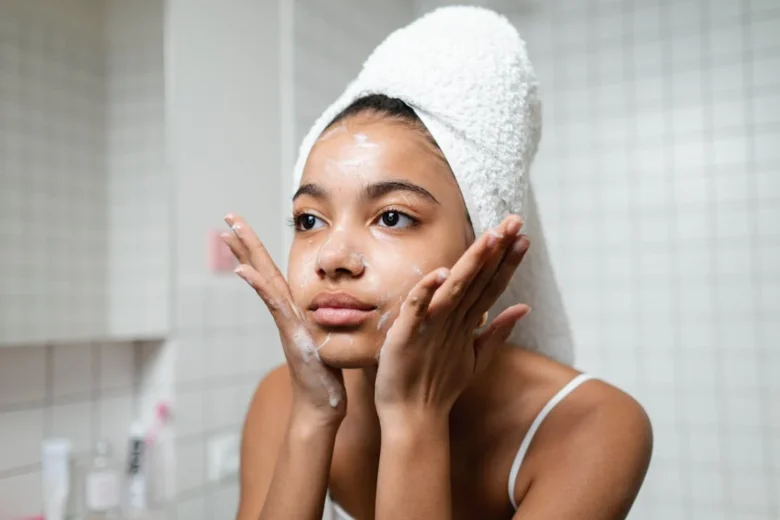
A simple beauty routine can help protect and maintain your skin’s glow, but it’s your lifestyle that really matters. It’s important to stick to it and choose the right products for your face. Wear sunscreen, even on cloudy days, and gently cleanse your skin every day. UV rays are one of the main reasons why people age faster, develop dark spots, and damage their skin.
Natural oils like almond, jojoba, or rosehip oil can also keep your skin hydrated and prevent your pores from clogging. Exfoliating once or twice a week can remove dead skin cells and reveal a more beautiful complexion. But if you do it too often, you can damage your skin, so be careful.
Avoid using harsh chemicals or products that claim to offer quick fixes. Treat your face gently and regularly, because most changes take time.
A Deeper Look at Factors That Affect Your Radiant Skin
Here’s a simple chart that shows how different habits (both good and bad) affect your face and which areas they impact the most:
| Daily Habit | Skin Impact | Result on Skin |
|---|---|---|
| Drinking 8+ cups of water/day | Hydration | Softer, plumper skin |
| Sleeping 7–9 hours/night | Cell repair | Reduced puffiness, glow |
| Eating processed foods daily | Inflammation | Breakouts, dull tone |
| Exercising 3–4x per week | Circulation boost | Natural radiance |
| Using sunscreen daily | UV protection | Fewer wrinkles, even tone |
| Smoking or vaping | Collagen breakdown | Early aging, dullness |
| Excessive alcohol intake | Dehydration | Dryness, uneven texture |
As this chart shows, the glow you’re looking for is the result of multiple small efforts working together. No single fix works overnight, but building daily habits that support your health will reflect in your skin in noticeable ways.
Staying Consistent for Long-Term Results
One of the most important aspects of achieving glowing skin naturally is consistency. One day of drinking water or eating clean won’t make a huge difference—but doing it every day will. Think of your skincare and lifestyle habits as an investment that compounds over time.
The body—and skin—loves routine. The more you repeat healthy behaviors, the more your skin learns to regenerate efficiently and fight off environmental stressors. Over time, you may find that you rely less on makeup to “fix” your skin because it naturally looks fresh and vibrant.
Keep your routine simple so that you’ll stick with it. The building blocks of natural, lasting radiance include a short skincare ritual, regular hydration, nutritious meals, good sleep, and manageable stress levels.
Frequently Asked Questions
Could you please let me know how long it typically takes to observe results from natural skincare habits?
You may notice small changes within a week—like better hydration or fewer breakouts—but real transformation usually takes 4 to 6 weeks of consistent habits.
Can diet alone improve my skin?
Yes, a nutrient-rich diet can dramatically improve skin health over time. Foods high in antioxidants, omega-3s, and fiber support skin repair and reduce inflammation.
What’s the best drink for glowing skin?
Water is essential, but drinks like green tea, herbal infusions, and lemon water also offer antioxidants and help hydrate your skin naturally.
Do I need expensive skincare products to have glowing skin?
Not at all. Many affordable, natural ingredients—like aloe vera, coconut oil, and jojoba oil—are effective when used correctly. It’s more about consistency than cost.
How can I reduce breakouts naturally?
Clean up your diet, reduce stress, drink more water, and avoid pore-clogging skincare products. Sleep and gentle cleansing also play a big role in preventing acne.
Is it okay to wear makeup if I want natural-looking skin?
Yes. Just make sure to choose non-comedogenic makeup and thoroughly cleanse your face at the end of the day. Let your skin breathe whenever possible.