
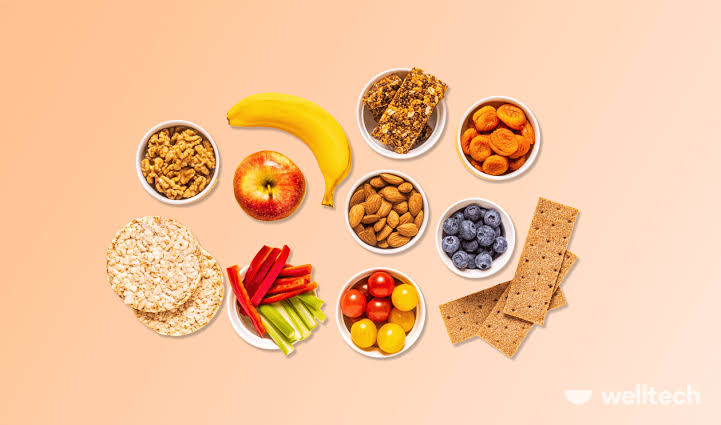
Getting hungry between meals is normal. The problem is that some snacks leave you looking for another snack 30 minutes later.
A better snack is not necessarily the one with the fewest calories or the label “healthy.” What matters is whether it provides enough protein, fiber, and volume to help you stay satisfied until your next meal.
For example, fruit can be a nutritious snack, but pairing an apple with peanut butter or yogurt can make it more filling because you are adding protein and fat. Similarly, plain crackers may provide quick energy without keeping you satisfied for very long, while whole-grain crackers with hummus provide a combination of carbohydrates, fiber, and protein.
This article focuses on simple snacks that can realistically fit between meals, why they may be more satisfying, and how to build your own without relying on heavily processed snack foods.
[Image suggestion: A simple overhead photo showing several filling snack combinations: Greek yogurt with berries, apple with peanut butter, hummus with vegetables, and boiled eggs.]
What Makes a Snack Filling?
There is no single food that keeps everyone full for the same amount of time. Hunger depends on factors such as your previous meal, activity level, sleep, individual energy needs, and how much you eat.
Still, certain characteristics generally make a snack more satisfying.
Protein
Protein can increase feelings of fullness and is an important nutrient for maintaining and building body tissues. Foods such as yogurt, eggs, beans, cottage cheese, nuts, and seeds can provide protein.
A snack containing protein is often more substantial than one consisting mostly of refined carbohydrates.
Fiber
Fiber-rich foods can add bulk to meals and snacks and may help with feelings of fullness.
Fruit, vegetables, oats, beans, lentils, nuts, seeds, and whole grains are useful sources.
The key is not to think of fiber as a magic appetite suppressant. It is simply one part of a balanced, satisfying snack.
Fat
Foods containing unsaturated fats can also make a snack more substantial. Nuts, seeds, nut butters, and avocado are examples.
Because fats are energy-dense, portions still matter, particularly if you are trying to manage your overall calorie intake.
Water and food volume
Foods with a high water content, such as fruit and many vegetables, can provide plenty of food volume without being particularly energy-dense.
That is one reason a bowl of vegetables with hummus can feel more substantial than a small handful of highly concentrated snack foods.
Healthy Snacks That Can Keep You Satisfied
1. Greek Yogurt With Berries
Plain Greek yogurt with strawberries, blueberries, raspberries, or another fruit makes a convenient combination of protein, carbohydrates, and fiber.
Choose unsweetened or lightly sweetened yogurt if you want to keep added sugar lower.
For extra texture, add a small amount of nuts or seeds.
Simple combination:
Plain Greek yogurt + berries + a spoonful of chopped nuts.
Why it works: The yogurt provides protein, while fruit contributes fiber and water. Nuts add additional fat and protein.
Practical tip: Keep individual portions of yogurt and washed berries ready in the refrigerator so the snack takes less than a minute to assemble.
[Image suggestion: A bowl of plain Greek yogurt topped with fresh berries and a small amount of chopped nuts.]
2. Apple With Peanut Butter
An apple on its own is already a nutritious snack, but adding a small amount of peanut butter makes it more substantial.
The apple provides carbohydrates, water, and fiber. Peanut butter contributes protein and mostly unsaturated fat.
Choose peanut butter without unnecessary added ingredients when possible.
Simple combination:
One apple + a small spoonful of peanut butter.
Watch the portion: Nut butter is nutritious but calorie-dense, so a modest amount can be enough.
3. Hummus With Carrots and Other Vegetables
Hummus made from chickpeas provides protein and fiber, while vegetables add water, volume, vitamins, and minerals.
Try hummus with:
- Carrot sticks
- Cucumber
- Bell peppers
- Cherry tomatoes
- Celery
You can also use whole-grain crackers or a small piece of whole-grain pita if vegetables alone do not keep you satisfied.
4. Boiled Eggs With Fruit
Hard-boiled eggs are easy to prepare ahead of time and provide protein and other nutrients.
Pairing an egg with fruit gives you a more balanced snack than eating the egg alone.
Try:
Boiled egg + orange
or
Boiled egg + apple
or
Boiled egg + banana
If you prepare eggs in advance, refrigerate them promptly and follow appropriate food-safety practices.
5. Oatmeal With Nuts and Fruit
Oatmeal does not have to be reserved for breakfast.
A small bowl of oats can work as an afternoon snack, especially when combined with fruit and nuts.
For example:
Oats + banana slices + chopped walnuts
Oats provide fiber, including beta-glucan, while nuts add protein and unsaturated fat.
Avoid turning the bowl into a dessert with large amounts of sugar or syrup if your goal is a simple everyday snack.
6. Cottage Cheese With Fruit
Cottage cheese is another protein-containing option that pairs well with fruit.
Try cottage cheese with:
- Pineapple
- Peaches
- Berries
- Sliced pear
- Apple
If you prefer savory foods, add tomatoes, cucumber, black pepper, or herbs instead.
7. Whole-Grain Crackers With Hummus
Sometimes you want something crunchy rather than a bowl of yogurt.
Whole-grain crackers with hummus can provide a combination of whole grains, fiber, protein, and fat.
Check the serving size on the package because it is easy to eat several servings without noticing.
Add cucumber or tomato slices for more volume.
8. Nuts and a Piece of Fruit
A small portion of almonds, walnuts, pistachios, or another unsalted nut paired with fruit is one of the easiest snacks to carry.
For example:
Small handful of almonds + pear
or
Walnuts + banana
Nuts are nutritious but energy-dense, so you do not need a large portion to make the snack satisfying.
9. Roasted Chickpeas
If you want something crunchy, roasted chickpeas can be an alternative to chips or other snack foods.
Chickpeas provide plant protein and fiber.
You can season them with paprika, black pepper, garlic powder, or other herbs and spices.
If you buy packaged roasted chickpeas, compare sodium and added ingredients between products.
10. Whole-Grain Toast With Avocado
A slice of whole-grain toast topped with mashed avocado provides carbohydrates, fiber, and mostly unsaturated fat.
For additional protein, add a boiled egg on top.
This can turn a relatively small snack into a more substantial mini-meal when you are particularly hungry.
[Image suggestion: Whole-grain toast topped with avocado and sliced boiled egg on a small plate.]
How to Build a Filling Snack Without Following a Complicated Plan
You do not need to memorize a list of “perfect” snacks.
Instead, use a simple formula:
Protein + fiber-rich carbohydrate or produce + optional healthy fat
Examples:
- Yogurt + berries + nuts
- Apple + peanut butter
- Hummus + vegetables + whole-grain crackers
- Egg + fruit
- Cottage cheese + pear
- Whole-grain toast + avocado + egg
- Oats + fruit + walnuts
This approach also makes it easier to use whatever foods you already have at home.
What If You Are Still Hungry After a Snack?
Being hungry after a snack does not automatically mean you chose the wrong food.
Your body may simply need more food.
Consider what you ate earlier in the day. If breakfast or lunch was very small, a small snack may not carry you comfortably to your next meal.
You can also make the snack more substantial by adding another food group.
For example, if an apple does not satisfy you, try adding peanut butter or yogurt.
If vegetables with hummus are not enough, add whole-grain crackers or pita.
The goal is not to suppress hunger at all costs. Hunger is useful information about your body’s need for food.
Common Snack Mistakes
Choosing snacks based only on the calorie number
A very small snack may look appealing because it contains few calories, but it may not satisfy you.
Instead of focusing only on calories, consider what the snack actually contains and whether it helps you stay comfortable until your next meal.
Eating refined carbohydrates by themselves
Cookies, sweetened cereal bars, pastries, and similar foods can be convenient, but snacks based mostly on refined carbohydrates may not be as satisfying as combinations containing protein and fiber.
This does not mean you can never eat them. It simply means they do not have to be your default everyday snack.
Eating directly from the package
It is easy to lose track of how much you are eating when you snack from a large bag or container.
Putting your portion into a bowl or small container can make it easier to see how much you are eating.
Turning every snack into a health-food project
A filling snack does not need expensive powders, supplements, specialty foods, or complicated recipes.
An apple and peanut butter can be just as practical as a recipe requiring ten ingredients.
A Simple Snack Plan for a Busy Day
If you want a straightforward approach, prepare two or three options in advance.
Morning:
Greek yogurt + berries
Afternoon:
Apple + peanut butter
Alternative:
Hummus + carrots + whole-grain crackers
After exercise or when especially hungry:
Boiled egg + fruit + whole-grain toast
You do not need to eat all of these. Choose according to your hunger and the timing of your next meal.
If you regularly need snacks because meals leave you hungry soon afterward, it may be worth looking at the meals themselves rather than continually adding more snacks.
Frequently Asked Questions
What is the best healthy snack to keep you full?
There is no single best snack for everyone. Options that combine protein with fiber-rich foods tend to be more substantial, such as Greek yogurt with berries and nuts, an apple with peanut butter, or hummus with vegetables and whole-grain crackers.
Are fruits filling enough on their own?
Fruit can be a satisfying snack, but some people may become hungry again relatively quickly. Pairing fruit with a protein- or fat-containing food, such as yogurt, nuts, or peanut butter, can make the snack more substantial.
Are nuts a good snack if I am trying to eat healthier?
Yes. Nuts provide protein, fiber, and mostly unsaturated fats along with several vitamins and minerals. They are also energy-dense, so a small portion can be enough.
Is Greek yogurt better than regular yogurt for fullness?
Greek yogurt generally contains more protein than many conventional yogurts, although the amount varies by product. Check the nutrition label rather than assuming every Greek yogurt has the same nutritional profile.
What should I eat if I am hungry shortly before dinner?
If dinner is only a short time away, choose a modest snack such as fruit, vegetables with a little hummus, or yogurt. If you are genuinely very hungry, a more substantial snack may make sense rather than trying to ignore the hunger.
Final Takeaway
A filling snack does not need to be complicated.
Start with a simple combination of protein + fiber-rich food, and add some healthy fat when it fits your needs.
Good everyday options include:
- Greek yogurt with berries and nuts
- Apple with peanut butter
- Hummus with vegetables and whole-grain crackers
- Eggs with fruit
- Oatmeal with fruit and walnuts
The right snack is ultimately one that fits your appetite, schedule, dietary needs, and overall eating pattern—not one that simply has a “healthy” label.
Sources
- Harvard T.H. Chan School of Public Health — The Nutrition Source: Guidance on healthy eating patterns, protein sources, whole grains, fruits, vegetables, and nuts.
- U.S. Department of Agriculture (USDA) — MyPlate: Guidance on building balanced eating patterns using fruits, vegetables, grains, protein foods, and dairy.
- National Institutes of Health (NIH), Office of Dietary Supplements: Evidence-based information about nutrients and dietary components.
- U.S. Food and Drug Administration (FDA): Nutrition Facts labeling and guidance for understanding packaged foods.